If you’ve ever stared at a bedding page trying to figure out whether you need a duvet or a comforter you’re not alone. The two terms get thrown around like they mean the same thing, but they don’t. They’re actually two different bedding systems that look similar on a made bed but work quite differently. Here’s a clear breakdown of how each one works, how they feel, and which one actually makes sense for your bedroom.
The Basic Difference – Two Systems, One Job
What Is a Comforter?
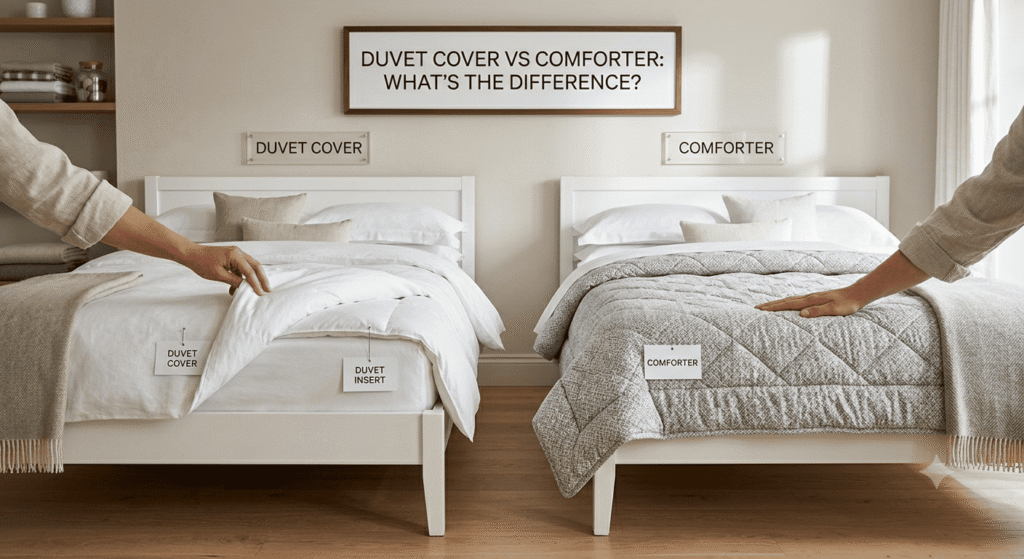
A comforter is exactly what it sounds like one complete, ready-to-use piece of bedding. It’s an all-in-one bedding solution built from a fabric shell filled with insulated filling, whether that’s down, down alternative, or synthetic material. What holds it all together is the quilted design, that grid or pattern of stitching you see across the surface. The stitching pattern isn’t just decorative. It’s functional. The sewn-in fill is locked in place by those seams, which keeps the insulation from bunching up in one corner and leaving you cold everywhere else.
You pull a comforter out of the packaging, put it on your bed, and you’re done. No extra steps, no separate pieces to manage. That simplicity is a big part of why people love them.
What Is a Duvet?
A duvet is a two-piece system. At the center of it is the duvet insert a soft, filled pouch that provides the warmth and loft. Around that goes the duvet cover, a removable fabric shell that protects the insert and gives the bed its finished look. Together they form what’s often called an insert + cover system.
Here’s where the language gets a little muddy: technically, “duvet” refers to the insert itself. But in everyday usage especially in North America people often say “duvet” when they mean the whole setup. When someone says they’re buying a duvet, they usually mean both pieces. Worth knowing when you’re shopping, because some retailers sell them separately.
Where the Confusion Comes From
The reason these two products get mixed up so often comes down to geography and marketing. In the UK and across much of Europe, “duvet” is the default term for your top layer bedding, it’s just what everyone calls it. In North America, “comforter” has historically been the more common word, and the two have been used so interchangeably that the structural difference gets lost.
They also look nearly identical on a made bed. Both sit on top as the main piece of bed linen, both come in similar fills and weights, and both serve the same basic purpose within a bedding system. Once you understand the construction difference, though, everything else becomes easier to navigate.
How Each One Is Made – Construction Matters
How a Comforter Is Constructed
The construction of a comforter is straightforward: insulated filling sits between two layers of fabric shell, and the whole thing is stitched together using a quilted design. That stitching pattern whether it’s a classic box grid, a diamond pattern, or something more decorative does the structural work of keeping the fill evenly distributed throughout the piece.
The type of filling matters a lot for feel and performance. Down is prized for its softness and natural breathability. Down alternative fills tend to be hypoallergenic and more accessible price-wise. The fabric shell affects how the comforter breathes and how it feels against the skin. A cotton shell, for example, will sleep cooler than a polyester one something worth paying attention to if temperature regulation is important to you.
How a Duvet Insert Is Made
A duvet insert is built similarly to a comforter in terms of basic construction fill inside a fabric shell but the key differentiator is fill power. Fill power is a measurement of how much space one ounce of down occupies. A higher fill power means more loft from less material, which translates to an insert that feels light but still delivers serious warmth and insulation.
This is why a quality duvet insert can feel almost impossibly light yet keep you genuinely warm. The loft created by high fill power traps air, and that trapped air is what provides the insulation. Lower fill power inserts tend to be heavier and denser to achieve the same warmth which some sleepers actually prefer.
The Role of the Duvet Cover
The duvet cover is the piece that most people interact with daily, even if they don’t think about it that way. It wraps around the insert, closes at one end usually with buttons, a zipper, or ties and becomes the visible, touchable surface of your bed.
Functionally, it protects the insert from body oils, sweat, and general wear. Practically, it’s what you actually wash on a regular basis rather than the insert itself. The cover’s fabric is what determines breathability, softness, and how the bed feels to sleep in. It also defines the style of the entire bed which is part of what makes the duvet system so appealing as a top layer bedding choice.
Dainty Linen carries duvet covers in cotton sateen and poly/cotton options, offering different textures and feels to suit different sleep preferences and bedroom aesthetics.
Warmth, Weight, and Feel – Which Performs Better?
Comparing Warmth and Insulation
Warmth works differently depending on which system you’re using. With a duvet, warmth is primarily determined by fill power and the overall weight of the insert. A high fill power insert delivers significant insulation in a lightweight package. A heavier insert with lower fill power achieves similar warmth through density rather than loft.
With a comforter, warmth comes from the combination of fill type, fill density, and how closely the stitching pattern is spaced. Tighter stitching means smaller fill pockets, which can slightly reduce insulation but helps maintain an even distribution of warmth across the whole piece.
For temperature regulation, a duvet system gives you more flexibility you can swap inserts seasonally. Most comforters are fixed at one warmth level year-round, which can be limiting depending on your climate and sleep comfort preferences.
Loft and Softness
Loft is one area where duvets with high fill power clearly stand out. That full, cloud-like puff you see on beautifully made hotel beds? Almost always a high-loft duvet insert. The volume of air trapped within the fill creates that lifted, generously filled appearance that’s hard to replicate with most comforters.
Comforters tend to sit flatter and more uniformly across the bed. That’s not a flaw, it’s a characteristic of the sewn-in fill construction. For many people, the softer, more relaxed profile of a comforter is exactly what they want. Softness in both systems ultimately comes down to the fabric shell and fill quality, so neither has an inherent advantage there.
Breathability and Temperature Regulation
Breathability in a duvet system is largely controlled by the cover fabric. A cotton or linen duvet cover will sleep significantly cooler than a polyester one. This is actually an advantage of the two-piece system, you can pair a warm insert with a breathable cover fabric and get the best of both.
With a comforter, the fabric shell is fixed, so breathability is baked into the product at the time of purchase. If you buy a comforter with a synthetic shell for the visual or price appeal, you don’t have the option to swap it out for something that breathes better in summer.
For year-round comfort, duvets offer more adaptability. The ability to change the cover, or even swap between a lighter and heavier insert seasonally, gives you a genuinely flexible sleep system in a way that a standard comforter can’t quite match.
Ease of Care – The Practical Side of the Comparison
Washing a Comforter
Washing a comforter is manageable but not exactly convenient. Because it’s an all-in-one piece, the whole thing needs to go in the machine and depending on its size, that often means a trip to a laundromat with an oversized machine. Thick comforters can take hours to dry properly, and repeated washing over time can affect how the sewn-in fill holds its shape and loft.
Most manufacturers recommend washing a comforter every one to three months, which means dealing with the full laundry process at those intervals.
Washing a Duvet System
This is where the insert + cover system has a clear practical edge. The removable cover which is what touches your body and absorbs the most wear gets washed as often as your regular bed sheets, typically every one to two weeks. The duvet insert itself only needs washing a few times per year.
Covers are much easier to launder than a full comforter. They wash like a standard pillowcase, dry quickly, and go straight back on the insert. This not only makes weekly maintenance more manageable but also extends the lifespan of the insert significantly since it’s not being subjected to frequent machine washing.
Style and Bedroom Versatility
Changing Up Your Look With a Duvet Cover
One of the most underrated advantages of the duvet system is how easy it makes it to refresh your bedroom’s look. Swap the cover and you’ve essentially changed the entire bed, new color, new texture, new feel, without touching the insert. Want a crisp white percale for summer and a deep velvet or sateen in winter? That’s a simple cover swap, not a whole new bedding purchase.
Dainty Linen’s duvet cover collection gives you that flexibility across multiple fabric types and styles, so updating your bedroom doesn’t have to mean starting from scratch.
The Comforter as a Complete Bedding Statement
Comforters have their own distinct aesthetic appeal that shouldn’t be overlooked. The quilted design and stitching pattern are visible on the surface, they’re part of the look, not something hidden under a cover. A well-chosen comforter with a striking pattern or a rich, textured fabric shell can serve as the visual centerpiece of a bedroom in a way that a plain duvet cover sometimes can’t.
For people who want their all-in-one bedding to make a statement on its own terms, a quality comforter absolutely delivers that.
Duvet vs Comforter – Which One Is Right for You?
Here’s an honest, practical way to think about it.
A comforter makes sense if you want simplicity. One piece, no assembly, wash it when needed, and it looks good on the bed. If you’ve found a quilted design you love and you’re not someone who changes their bedroom décor often, a comforter is low-maintenance and reliable.
A duvet system makes sense if you want flexibility. The ability to swap covers, wash them easily, adjust warmth seasonally with a different insert, and extend the life of your bedding investment, these are meaningful practical advantages. If you’re the kind of person who likes to refresh your space without spending a lot, the insert + cover system makes that easy.
Both work beautifully as top layer bedding. Both can deliver excellent sleep quality and year-round comfort when chosen thoughtfully. The right answer isn’t about which one is objectively better, it’s about which one fits the way you actually live. A blanket or quilt might also be layered on top of either system depending on preference, but as a foundation for your bed, both comforters and duvets are solid choices. It just depends on what you’re optimizing for.
Frequently Asked Questions
Is a duvet the same as a comforter?
Not exactly. A comforter is a single all-in-one piece with sewn-in fill. A duvet is technically just the insert it’s designed to be used inside a separate duvet cover. They look similar on a made bed but work as different bedding systems.
Do you need a flat sheet with a duvet?
You don’t have to, but many people use one. A flat sheet adds a lightweight layer between your body and the duvet cover, which can help extend the time between cover washes and adds a bit of extra comfort.
What fill power should I look for in a duvet insert?
For a good balance of warmth and loft without excessive weight, look for fill power between 600 and 800. Higher numbers (800+) mean lighter inserts with excellent insulation ideal if you want that plush, hotel-style feel.
Can I use a duvet cover on a comforter?
Yes, in most cases. As long as the dimensions are close, a duvet cover can be used over a comforter. This is actually a popular way to refresh the look of an older comforter or protect it from wear.
What’s the difference between a duvet, a quilt, and a blanket?
A duvet uses a loose fill insert for loft and warmth. A quilt is thinner, typically made from layered fabric with minimal fill, and features decorative stitching throughout. A blanket is a simple woven layer with no fill at all lighter and used more for supplemental warmth.
How often should I wash my duvet cover vs the insert?
Wash your duvet cover every one to two weeks alongside your regular bed sheets. The insert only needs washing two to three times per year under normal use.
Bottom Line
At the end of the day, the difference between a duvet and a comforter comes down to one thing, structure. A comforter is one complete piece; a duvet is a system built from two. Neither is the wrong choice. It’s about what works for your lifestyle, your sleep habits, and how you like your bedroom to look and feel. Browse Dainty Linen’s duvet cover collection and comforter range to find the right fit for your bed.