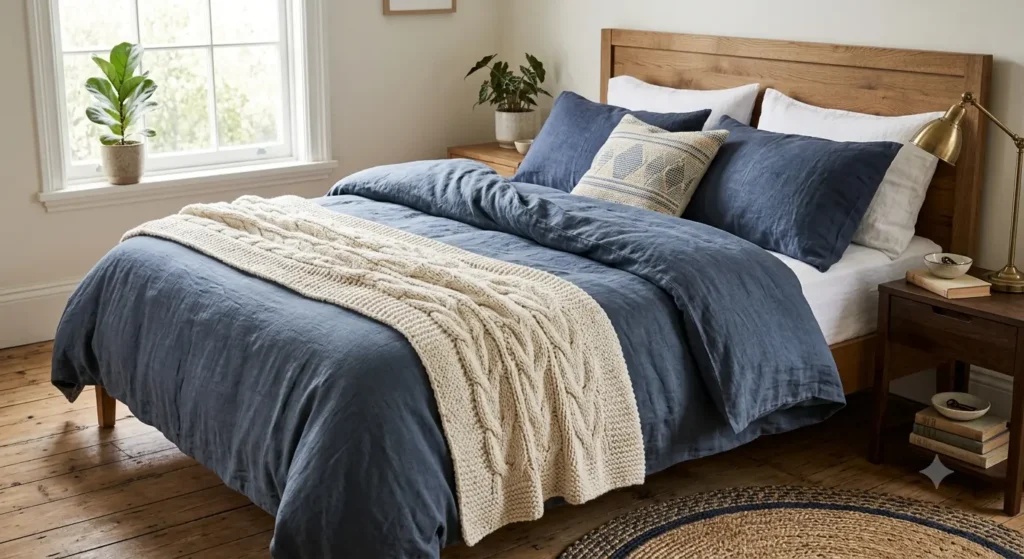
Choosing bedding might seem simple until you’re standing in front of dozens of options, each promising the softest sleep of your life. Fabric type, weave, thread count, and fill all play a role in how comfortable your bed actually feels. This guide breaks down everything you need to know to choose bedding that matches your comfort preferences, climate, and lifestyle, so every night’s sleep feels like an upgrade.
Start With Fabric Type
The fabric you sleep on directly affects temperature regulation, softness, and how your skin feels against the sheets. Each material offers a distinct experience.
Cotton remains the most popular bedding fabric, and for good reason. It’s breathable, soft, and gets better with every wash. Within cotton, there are important distinctions: Egyptian cotton and Pima cotton use longer fibers that create smoother, more durable fabric, while standard cotton uses shorter fibers that are more prone to pilling over time.
Linen is a favorite for warm climates or hot sleepers. It’s highly breathable, moisture-wicking, and becomes softer with age. Linen has a naturally textured, relaxed look that appeals to those who prefer a more casual bedroom aesthetic over crisp, hotel-style sheets.
Microfiber and other synthetic blends are budget-friendly and wrinkle-resistant, but they tend to trap heat and moisture more than natural fibers. These can work well for guest rooms or households prioritizing easy care over premium comfort.
Bamboo and Tencel fabrics have grown in popularity for their silky texture and natural moisture-wicking properties. They’re a strong option for sensitive skin, as they tend to be hypoallergenic and gentle.
Understand Weave Types
Weave affects texture just as much as fiber choice does, and picking the right one comes down to personal preference.
Percale is a tight, plain weave that produces a crisp, cool, matte finish. It’s ideal for hot sleepers or anyone who prefers a hotel-like, breathable feel similar to a fresh cotton shirt.
Sateen uses a weave that creates a smoother, silkier surface with a subtle sheen. It drapes beautifully and feels luxurious against the skin, though it tends to retain slightly more heat than percale.
Twill produces a diagonal weave pattern with a soft, durable texture, often used in flannel or heavier weight sheets suited for cooler climates.
Knowing your weave preference helps narrow down options quickly, since two sheets with the same thread count can feel completely different depending on how they’re woven.
Thread Count: What It Really Means
Thread count often gets more attention than it deserves. While it can indicate fabric density, a high thread count made from low-quality fibers won’t outperform a moderate thread count made from premium long-staple cotton. Generally, a thread count between 300 and 500 offers a good balance of softness and durability for most sleepers. Anything significantly higher often relies on multi-ply threads that inflate the number without necessarily improving comfort.
The better strategy is to prioritize fiber quality and weave type first, then use thread count as a secondary consideration.
Choosing the Right Fill for Comforters and Duvets
Comfort isn’t just about sheets the fill inside your comforter or duvet significantly affects warmth, weight, and overall coziness.
Down fill is prized for its warmth-to-weight ratio and soft, cloud-like feel. Higher fill power indicates better insulation and loft, meaning less material is needed to achieve the same warmth.
Down-alternative fill offers a similar look and feel to down while being more affordable and often easier to care for. It’s also a good option for those with allergies to natural down.
Weighted or heavier fills work well for colder climates or anyone who enjoys a heavier, more grounding feeling while sleeping. Lighter fills suit warmer regions or hot sleepers who want coverage without excess heat retention.
Match Bedding to Your Climate and Season
Comfortable bedding isn’t one-size-fits-all when it comes to temperature. In warmer months or hot climates, breathable materials like linen or percale-weave cotton help prevent overheating. In colder months, flannel, heavier twill weaves, or higher-fill-power comforters provide better insulation.
Many households benefit from having seasonal bedding rotations lighter sheets and duvets for summer, warmer options for winter to maintain consistent comfort year-round rather than relying on a single set for every season.
Consider Your Sleep Style and Sensitivities
Comfort is personal, and factors like body temperature, allergies, and skin sensitivity all influence which bedding works best.
- Hot sleepers should prioritize breathable fabrics like linen or percale cotton and lighter-weight fills.
- Cold sleepers benefit from flannel, sateen weaves, or higher-loft down comforters.
- Sensitive skin or allergy sufferers should look for hypoallergenic materials like bamboo, Tencel, or down-alternative fills, along with sheets that are free from harsh chemical treatments.
- Side sleepers and stomach sleepers may prefer softer, more pliable fabrics like sateen, while back sleepers often do well with crisper percale.
Don’t Overlook Proper Fit
Ill-fitting sheets are one of the most common comfort complaints, often caused by mismatched sizing rather than fabric quality. Deep-pocket fitted sheets are essential for thicker mattresses, while standard mattresses may not need the extra pocket depth. For non-standard bed sizes, custom-sized bedding ensures a proper fit that stays in place throughout the night, preventing the bunching and slipping that disrupts sleep.
Caring for Your Bedding to Maintain Comfort
Even the most comfortable bedding requires proper care to maintain its feel over time. Washing sheets in cool or warm water, avoiding excessive heat when drying, and using mild detergents helps preserve fabric softness and prevent premature wear. Rotating between multiple sets also reduces the frequency of washing needed for any single set, extending its lifespan and keeping the comfort level consistent.
For comforters and duvets, following care label instructions carefully including professional cleaning when recommended helps maintain loft and insulation properties for years to come.
Final Thoughts
Choosing comfortable bedding comes down to understanding how fabric type, weave, thread count, and fill work together to create the sleep experience you’re looking for. There’s no single “best” option, the right choice depends on your climate, sleep style, and personal preferences. By focusing on quality materials and proper fit rather than chasing high thread counts alone, you can build a bedding collection that delivers night after night of genuine comfort.